
Published on 20 June 2025
New testing requirements for lithium-ion battery safes with VDMA 24994

Lithium-ion batteries are powerful, but they also carry serious risks. During charging, they can catch fire or explode, releasing toxic smoke, damaging your premises and endangering your staff.
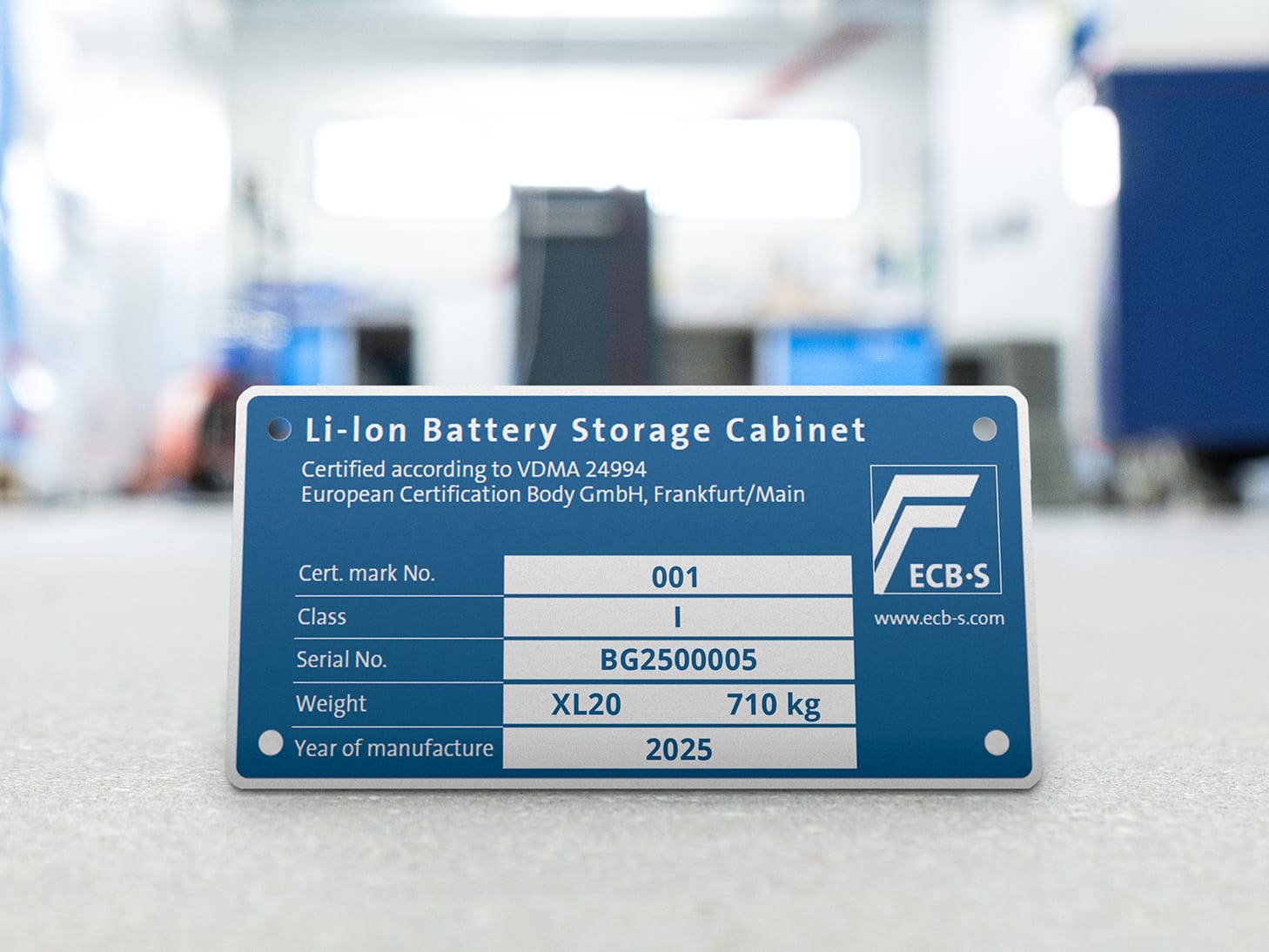
For years, there were no clear regulations for the safe storage and charging of these batteries. As incidents increased, one crucial question remained unanswered: how do you know if a battery safe is truly safe? That’s why the VDMA 24994 safety requirements were developed. What began as testing criteria has now grown into an official certification by ECB-S.
What is VDMA 24994?
VDMA 24994 defines the testing requirements for battery cabinets. Only cabinets that pass rigorous practical tests with lithium-ion batteries receive an ECB-S certificate.
Testing can only be carried out by accredited laboratories. In Europe, there are just two: MPA Dresden (Germany) and GryfitLab (Poland), both recognised by ECB-S.. This guarantees that every certified safe is tested using the same strict and reliable method — ensuring the certificate’s credibility.
What does the VDMA 24994 test involve?
To receive the certificate, a battery safe must withstand extreme conditions. The test simulates a thermal runaway — a scenario where batteries overheat and catch fire. The safe is fitted with sensors to assess whether:
- Flames remain contained
- Doors stay closed during an explosion
- Internal temperature stays below 150 °C
Only if the safe meets all these criteria will it receive the certificate. Read more about battery fires and the risks involved.

Is Batteryguard XL tested according to VDMA 24994?
Absolutely. The Batteryguard XL has been successfully tested and is officially certified. This proves the safe meets the highest safety standards for lithium-ion battery storage. View our certified battery safes.
Why is the VDMA 24994 test important for your business?
A battery fire can bring everything to a halt. You risk major property damage, business disruption, evacuation of nearby buildings and even injury to employees. The consequences are severe — and often hard to predict.
That’s why VDMA 24994 matters. It shows that a battery safe has been thoroughly tested for fire and explosion risks — and prevents further damage. Insurance companies are also becoming more strict. In many cases, they now require that lithium-ion batteries be stored and charged in a certified battery safe.
Towards a European standard
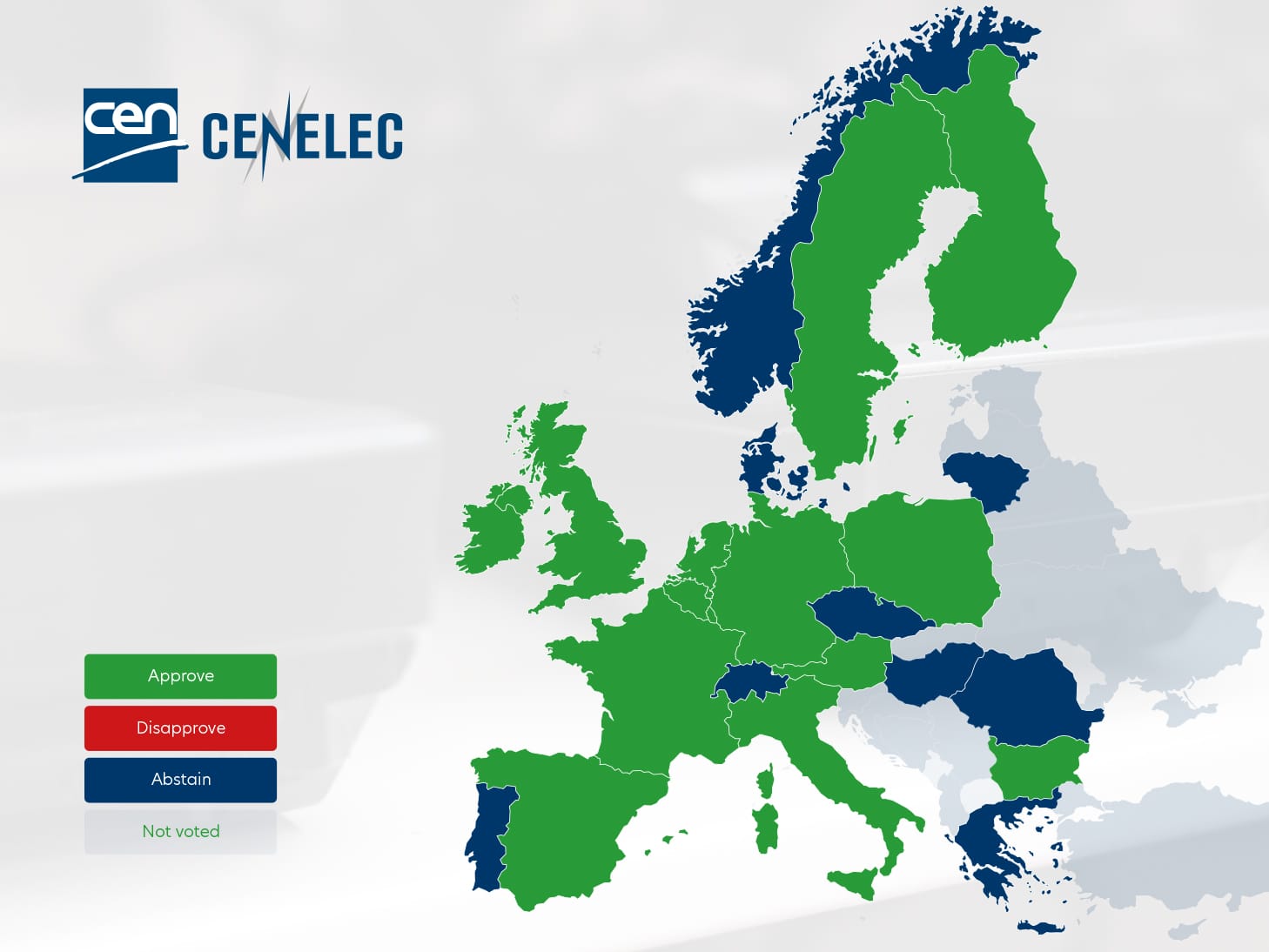
The VDMA 24994 testing requirements are not a standalone solution. It’s currently being used as the basis for a new European standard for lithium-ion battery storage.
That standard is under development, but formal adoption may take years. In the meantime, VDMA 24994 serves in practice as the key reference for safe battery safes. Want to stay ahead of future regulations? Then a certified battery safe is the smart choice.
Take action today
Want to prevent battery fires and improve safety in your business? Choose certainty. Contact us to find out how the Batteryguard XL battery safe protects your company from the risks of lithium-ion batteries.
Prefer to read more first? Download our whitepaper to learn about the dangers and solutions around battery fires.
Curious about all the possibilities?
Our safes specialists will be happy to advise you on our Batteryguard battery cabinets.
Also interesting:
24 March 2025
Batteryguard XL battery cabinet certified by ECB-S according to VDMA 24994!
Good news! The Batteryguard XL battery cabinet is now officially certified...
Read more

11 February 2025
Batteryguard XL battery safe passes VDMA 24994 test!
Our Batteryguard XL battery safe has successfully passed the rigorous VDMA...
Read more
23 December 2024
Development of a European standard for lithium-ion batteries has begun
Good news: the first steps towards a European standard for the...
Read more

15 October 2024
How to choose a secure lithium-ion battery safe? We explain it!
Finding a secure lithium-ion battery safe can be quite a challenge....
Read more
