
Published on 23 September 2025
What you need to arrange for a safe working environment with lithium-ion batteries

It seemed like a normal workday, until someone noticed the smell of smoke near a socket in the workshop. Moments later, it became clear that a lithium-ion battery had overheated while charging. The damage was limited, but it could have been much worse.
As an employer, you’re responsible for providing a safe working environment, and that includes safe practices around lithium-ion batteries. That calls for a clear understanding of the risks and practical safety measures.
In this article, you’ll learn:
The hidden risks of lithium-ion batteries in the workplace
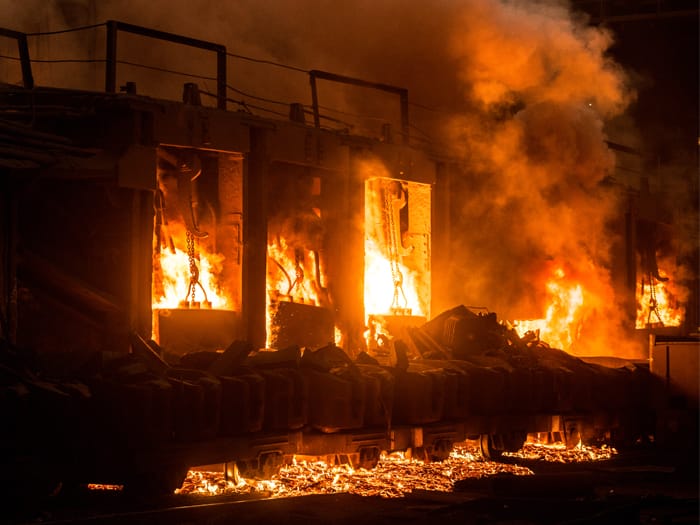
Lithium-ion batteries are everywhere in modern workplaces, in tools, forklifts, electric bikes or drones. They’re convenient and powerful, but also vulnerable. When damaged or misused, they can overheat and even catch fire, often without warning.
The most common hazards include:
- Toxic smoke: Battery fires release thick smoke that’s harmful to human health
- Risk of explosion: When things go wrong, batteries can become extremely hot and explode
- Limited time to respond: Fire and smoke can spread quickly, making evacuation difficult
Even a small incident can have serious consequences for both your staff and your premises. That’s why it’s crucial to train your employees in battery safety and invest in safe charging and storage solutions.
What your battery safety plan should include
If your organisation uses lithium-ion batteries, your safety policy and risk assessments should specifically cover how you manage them. A thorough risk assessment should answer the following questions:
- Where and how are batteries charged? Make sure your plan includes designated charging areas and clear supervision.
- Are employees trained to recognise hazards? Provide safety training and clear instructions for handling batteries.
- Are procedures in place for safe charging, handling, and storage? Document every step clearly to reduce human error.
A risk assessment is only useful if it leads to concrete safety measures. So what should you actually do?
Five steps to create a safer workplace with lithium-ion batteries
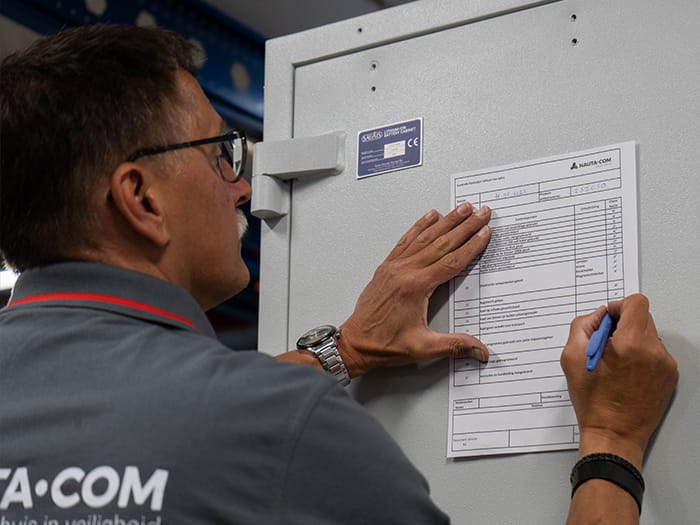
Creating a safe work environment with lithium-ion batteries means making the right choices. These five steps are a solid foundation:
- Only use original chargers that are designed for the battery in use.
- Avoid overcharging, remove batteries from the charger as soon as they’re fully charged.
- Inspect batteries regularly for damage, swelling or unusual smells.
- Always charge batteries inside a certified battery safe to prevent a fire from spreading.
- Train your employees in safe handling and make battery safety a standard part of daily operations.
How the Batteryguard battery safe truly protects your workplace
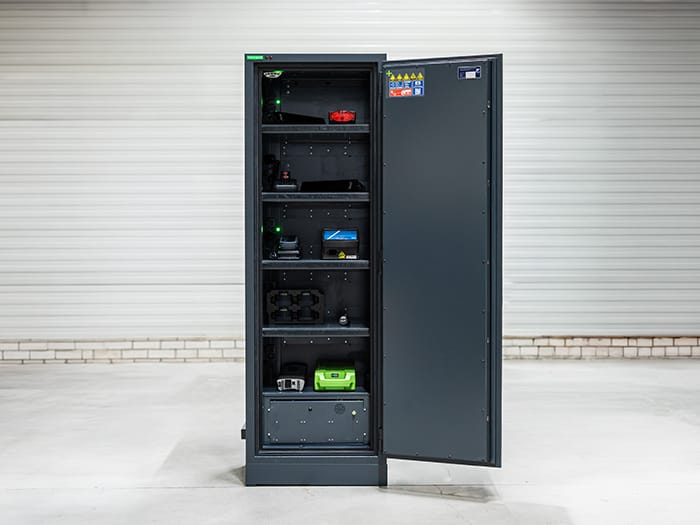
It’s not always possible to prevent a battery fire. But you can stop it from spreading or getting worse. That’s exactly why the Batteryguard XL battery safe was developed.
Our battery safe is:
- Certified and tested according to VDMA 24994 test requirements – giving you peace of mind that fire, smoke and pressure stay safely contained.
- Suitable for any industry – from construction to logistics and everything in between.
- A clear safety measure – making it easier to demonstrate compliance with workplace safety standards.
Take the next step toward a safer workplace

The risks of lithium-ion batteries are real. That’s why it’s important to act now. A battery safe that meets international safety standards ensures that if a fire starts, it stays contained.
Batteryguard battery safes are tested according to VDMA 24994. They’re designed to keep fire, smoke and explosion pressure safely inside, protecting your employees, your building and your operations. We offer a range of solutions for different industries and battery types. Fast delivery, easy installation.
Get expert advice on the best battery safe for your organisation.
Safe charging of lithium-ion batteries.
Curious about all the possibilities?
Our safes specialists will be happy to advise you on our Batteryguard battery cabinets.
Also interesting:

30 March 2026
View the new Batteryguard brochure
Are you looking for a battery safe for your organisation? Then...
Read more
26 February 2026
New: compact, certified Batteryguard HE battery safes
Does your organisation work with lithium-ion batteries? Then you know that...
Read more

18 December 2025
Fire above the clouds – When batteries become dangerous
A recent incident on an airplane dramatically illustrates the risks associated...
Read more

30 September 2025
What a battery safe does, and what a safety cabinet does not
Lithium‑ion batteries are convenient, but can also be dangerous. A single...
Read more
