Always charged batteries
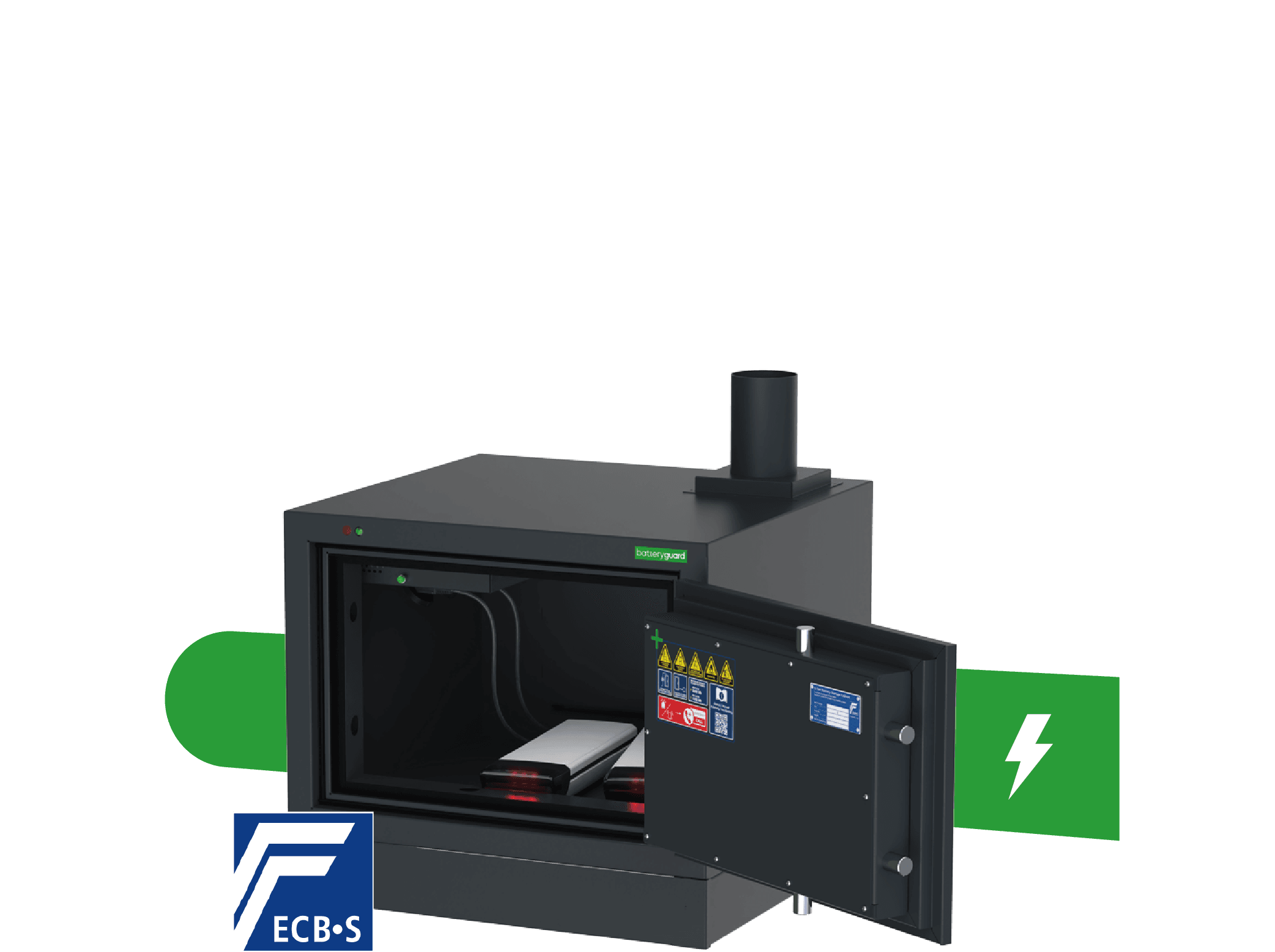
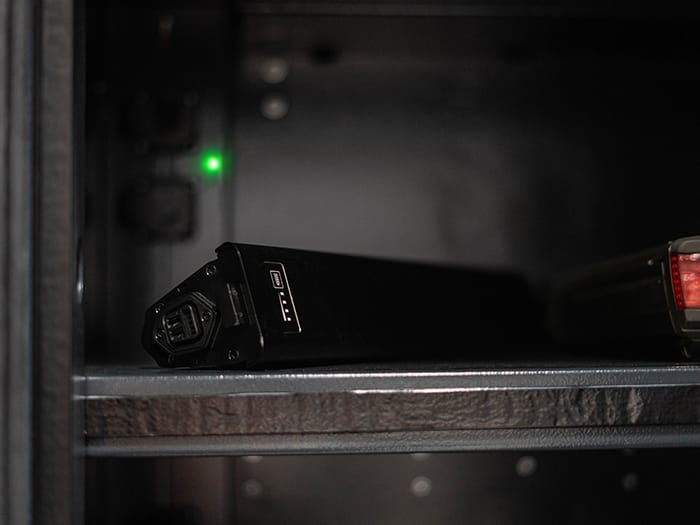
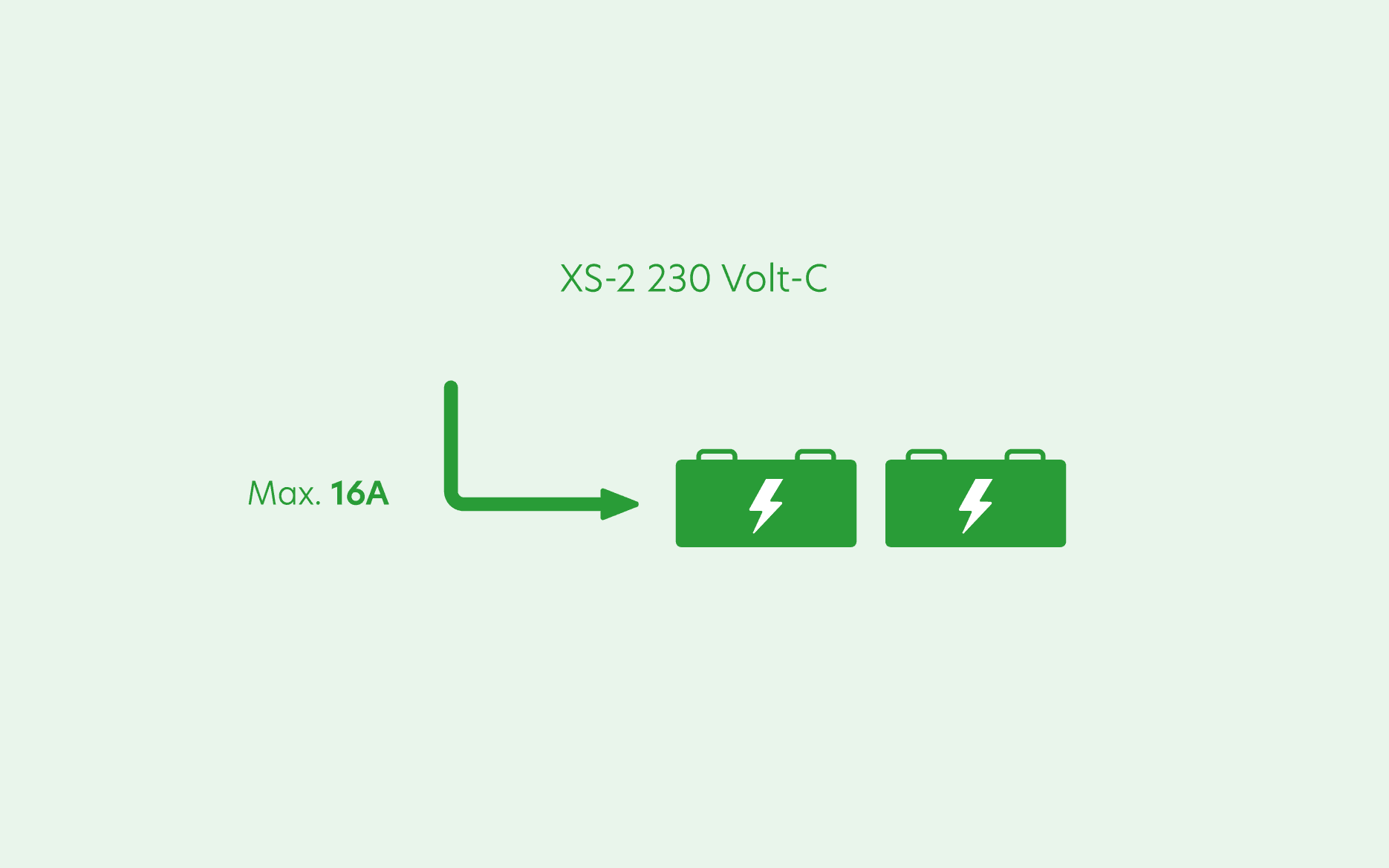
Do you have one or two e-bike or power tool batteries that you charge every day? The Batteryguard XS-2 battery safe makes sure those batteries are always ready when you need them. You can charge both batteries at the same time, as long as the total load stays below 16 amps.
Delivered with European sockets as standard; versions with UK, French or Swiss sockets are available on request.


Who is the Batteryguard XS-2 for?
The Batteryguard XS-2 is the smallest model in the Batteryguard range. This battery safe is ideal if you only have a few batteries, but still want to store and charge them safely in one fixed place.
You will recognise yourself in these situations:
- You use one or two e-bike or power tool batteries that you need every day
- You want to avoid having batteries lying around in cupboards, corridors or offices
- You have a 230 V connection available at your location
Certified battery safe
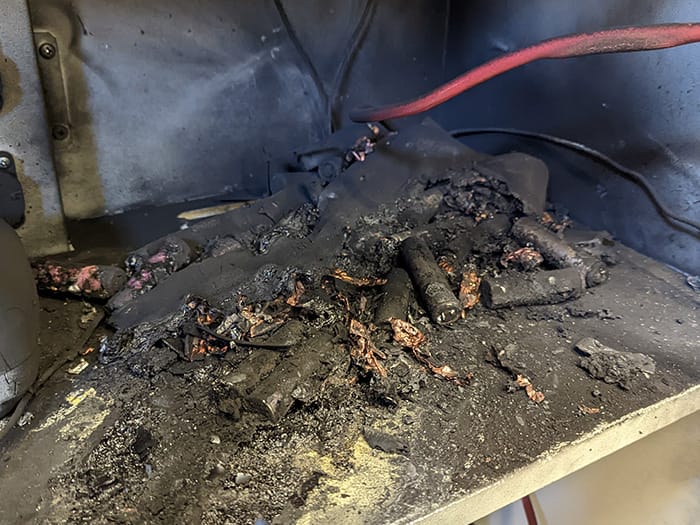
Even with one or two batteries, you do not want to take any risk of fire. The Batteryguard HE XS-2 is therefore designed so that a battery fire remains in the battery safe as much as possible. If something goes wrong with a battery, the incident is contained in one enclosed space. This helps prevent fire and smoke from spreading quickly through your building.
The HE XS-2 has been tested according to the VDMA 24994 test requirements. Based on these tests, the battery safe has been awarded the ECB-S certificate.

Official documentation for your insurance adviser
Insurers often want to see which measures you have taken to charge and store batteries safely. With the right documents, you can easily show that you have chosen a tested and certified battery safe that complies with current regulations.
The official documents below will help you do that. You can also use them for your risk assessment and when setting up or updating your internal safety rules:
Which battery safe suits your workplace?
Not sure whether the compact HE XS-2 is the right battery safe for you? We are happy to look at it with you. In a short conversation we discuss:
- which types of batteries you use and how many you have
- when you charge them and how often
- which electrical groups and connections are currently available at your location